 Skip to content

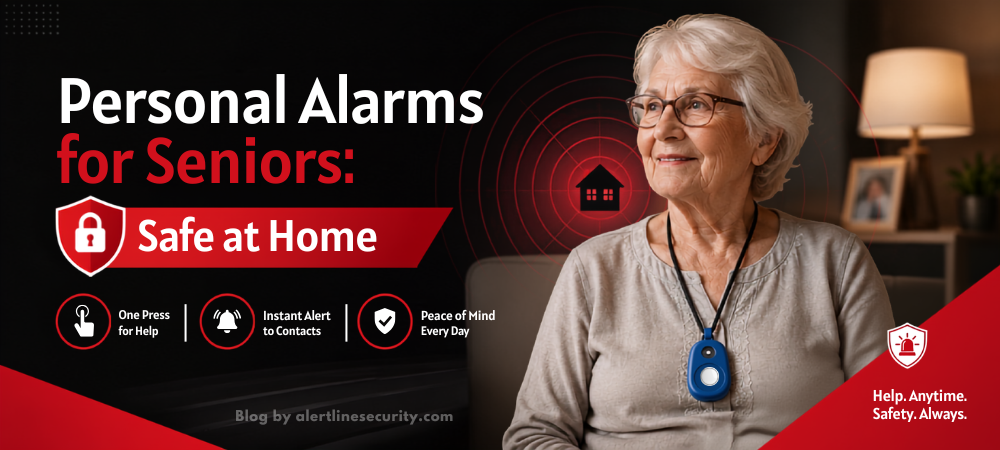
Personal Alarms for Seniors: Safe at Home
Quick facts
- Personal alarms for seniors let an older person call for help at the press of a button, day or night, without needing to reach a phone.
- A 24/7 monitored alarm service in Ireland connects that call to a live response team, not just a loud siren, so help is actually dispatched.
- GPS personal alarms for seniors add location tracking, which matters for anyone who is active outdoors, walks, or has early-stage memory concerns.
- Falls, not burglaries, are the most common reason older adults use these alarms, so response speed after a fall matters more than any other feature.
If you are researching personal alarms for seniors for a parent or relative, the core decision is simple: do they need a home-based alarm, a GPS alarm they can wear outdoors, or a monitored service that puts a real person on the other end of the call. This guide walks through how each option works, what actually matters when choosing one, and how to buy a personal alarm for seniors that fits your situation.
What Is a Personal Alarm for Seniors?
A personal alarm is a small wearable device, usually a pendant or wristband, with a single button that triggers a call for help. Most modern systems fall into two categories:
- Static home alarms, which connect to a base unit plugged into a landline or mobile SIM, and work throughout the house and garden.
- GPS personal alarms for seniors, which use mobile networks and satellite positioning to work anywhere, including on walks, at the shops, or travelling.
Both types are designed for one specific moment: when someone falls, feels unwell, or is in danger and cannot reach a phone.
Why Falls Make Response Speed the Most Important Feature
Falls are the leading reason personal alarms exist. Age-related falls research consistently shows that time spent on the floor after a fall, sometimes called “long lie” time, is directly linked to worse recovery outcomes and higher rates of hospital admission. A personal alarm only helps if the response after the button is pressed is fast and reliable.
This is why the type of monitoring behind the alarm matters more than the device itself.
Monitored vs Unmonitored Personal Alarms
Not all personal alarms are connected to a live response team. It’s worth understanding the difference before you buy.
| Factor | Monitored Alarm Service | Unmonitored Alarm |
|---|---|---|
|
What happens when pressed
|
Connects to a live 24/7 response team
|
Calls or texts a pre-set list of family contacts
|
|
Response reliability
|
Trained operator every time, day or night
|
Depends on someone being available to answer
|
|
Best for
|
Anyone living alone, or with irregular family availability
|
Households where a family member is almost always reachable
|
|
Typical cost
|
Small ongoing monitoring fee
|
One-off device cost, no subscription
|
A 24/7 monitored alarm service in Ireland is generally the safer choice for anyone living alone, since it guarantees a trained responder is always available, rather than relying on a family member picking up their phone at 3am.
GPS Personal Alarms for Seniors: When Location Tracking Matters
A GPS personal alarm for seniors is worth considering when the person:
- Regularly walks, gardens, or travels outside the home
- Has early-stage dementia or memory concerns and could become disoriented
- Lives in a rural area where a static home alarm's range wouldn't cover the whole property
- Wants to stay independent and active without family worrying about "where they are" if they don't answer a call
Unlike a static home alarm, a GPS device works wherever there’s mobile signal, so a fall on a walk or in the garden gets the same fast response as one at the kitchen table.
What to Check Before You Buy a Personal Alarm for Seniors
Not every alarm on the market offers the same level of protection. Before you buy a personal alarm for seniors, check for:
- 24/7 live monitoring, not just an automated call or text to family
- Fall detection, which can automatically trigger an alert even if the person can't press the button themselves
- Battery life and charging routine that suits the person's memory and daily habits
- No long-term contract lock-in, so the service can be adjusted or cancelled as needs change
Personal Emergency Alarms in the UK and Ireland: What's Different?
Personal emergency alarms in the UK and personal alarms for seniors in Ireland work on largely the same technology, but coverage, response centre locations, and emergency service integration can vary by provider and region. When comparing providers across both markets, check specifically whether the monitoring centre operates locally, since local response teams are often more familiar with regional emergency services and can coordinate a faster handover if paramedics are needed.
How Personal Alarms Support Independent Living
The goal of a personal alarm isn’t to restrict independence, it’s the opposite. Knowing that help is one button press away, whether at home or out on a walk, is often what allows an older adult to keep living independently for longer, and gives family members real peace of mind rather than constant worry. Many families tell us the alarm gets used rarely, but the confidence it provides is used every single day.
For more detail on how monitored response actually works once a button is pressed, read our full guide on how 24/7 monitored alarm services work.
Frequently Asked Questions
A monitored personal alarm with fall detection is generally the best choice for someone living alone, since it connects to a live 24/7 response team rather than relying on a family member being reachable at any hour.
Static home alarms typically only work within range of the base unit, usually the house and garden. A GPS personal alarm for seniors works anywhere there is mobile signal, making it a better fit for anyone who is active outside the home.
Costs vary by provider and features, but most monitored alarm services charge a small recurring fee on top of the device cost, covering live monitoring around the clock rather than a one-off purchase.
Many modern personal alarms include automatic fall detection, which can trigger an alert even if the wearer is unable to press the button themselves after a fall.
If the person regularly leaves the house, walks, or has memory concerns, a GPS personal alarm for seniors provides meaningfully better protection than a static home-only alarm, since it works wherever they go.
Final Thoughts
Choosing the right personal alarm for seniors comes down to how and where the person actually spends their time, and how confident you need to be that help will always answer. For most families, a 24/7 monitored alarm service with fall detection, and GPS coverage if the person is active outside the home, offers the strongest combination of safety and independence. If you’re ready to compare options, get in touch for a free consultation and find the right personal alarm for your loved one.
SEND US MESSAGE
RECENT POSTS
A practical guide for data centre operators, facility managers and IT decision-makers across the UK and Ireland...

A practical, professional guide for event organisers, venue managers and corporate/festival/ conference planners across Ireland and the UK...
Every year, thousands of Irish homeowners lock up, head for the airport, and spend the first evening of their holiday...
Personal alarms for seniors let an older person call for help at the press of a button, day or night,...
