 Skip to content

Going Away? A Home Security Checklist for Irish Homeowners
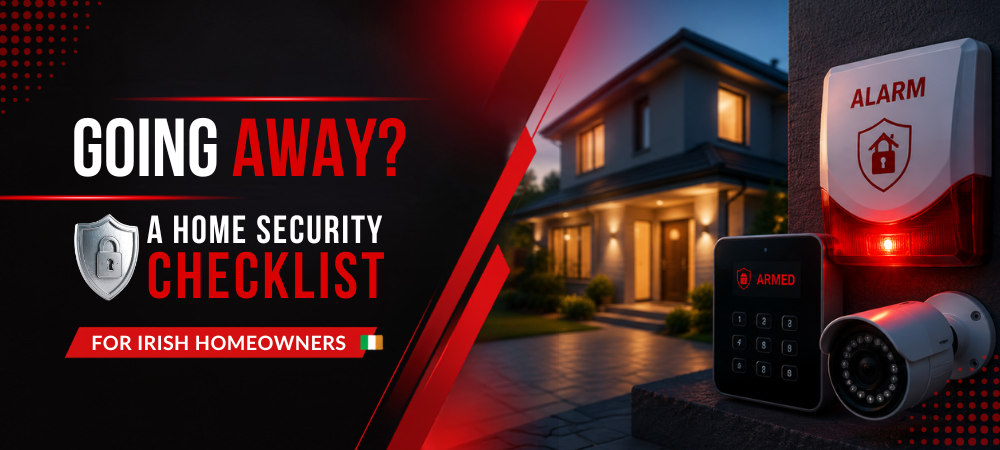
Every year, thousands of Irish homeowners lock up, head for the airport, and spend the first evening of their holiday quietly wondering whether they remembered to arm the alarm. That instinct is worth listening to. An empty house, however briefly, is a different proposition to a lived-in one, and burglars know it.
Quick facts
A home security checklist Ireland homeowners can rely on before travelling should include locking all doors and windows, testing the alarm and CCTV, using timer lights, avoiding social media posts about travel, asking a neighbour to check in, and securing outbuildings, valuables, and post.
Why Home Security Matters Before You Travel
An unoccupied home sends signals, whether homeowners realise it or not. Overflowing post, a dark house every evening, an unmown lawn, or a caravan of confirmation that nobody is home for a fortnight all add up to opportunity for someone watching the street.
Home security Ireland statistics consistently point to opportunist burglary as the more common pattern, rather than planned, professional break-ins. Opportunists look for the path of least resistance: an unlocked side gate, a window left ajar for ventilation, or a spare key hidden under a plant pot. None of these require special skill to exploit.
Holiday periods, in particular, concentrate this risk. Homes near the coast, rural properties, and second homes used only occasionally are often unoccupied for longer stretches, and routines that neighbours would otherwise notice, such as bins going out or curtains opening, simply stop happening.
None of this means holidaymakers should feel unable to relax. It means a short, structured routine before locking the front door removes the majority of the risk. That is exactly what the checklist below is designed to do.
Your Complete Home Security Checklist Before Going Away
Work through the following sections in the days before you travel, not the morning you leave. Some steps, such as testing an alarm or arranging deliveries, need a little lead time.
1. Lock All Doors and Windows
This sounds obvious, yet unlocked doors and windows remain one of the most common ways burglars gain entry. Check every access point, including upstairs windows, side doors, and any door leading from a garage into the house. Don’t forget skylights or small bathroom windows left open for airflow.
2. Test Your Burglar Alarm
3. Check CCTV Cameras
Walk around the property and confirm every camera has a clear, unobstructed view, is recording, and is connected to your app or monitoring service. Overgrown hedges and misaligned cameras after a storm are common, easily missed problems. Alertline Security’s CCTV Monitoring service checks connectivity remotely, so gaps are flagged before they matter.
4. Install Motion Sensor Lighting
Motion sensor security lighting around entry points, side passages, and driveways startles anyone approaching in the dark and draws attention from neighbours or passers-by. It is inexpensive, easy to retrofit, and one of the more effective visible deterrents available.
5. Avoid Posting Your Holiday on Social Media
Public posts announcing dates away, tagging locations, or sharing a countdown to departure are a gift to anyone monitoring accounts for empty-house opportunities. Share holiday photos when you’re home, not while the house is sitting empty.
6. Ask a Trusted Neighbour to Keep an Eye on Your Property
A neighbour who knows your travel dates can collect post, report anything unusual, park a car in your driveway occasionally, and generally keep the property looking lived in. Give them a contact number and, if appropriate, a key kept securely rather than hidden outside.
7. Put Lights on Timers
Timers on two or three lights in different rooms, set to switch on and off at varying times in the evening, create a far more convincing impression of occupancy than one light left on constantly. Smart plugs allow this to be adjusted remotely if plans change.
8. Secure Garages, Sheds and Side Gates
Ladders, tools, and garden equipment left accessible can be used to force entry elsewhere on the property. Lock sheds and garages, and make sure side gates are bolted, not just closed.
9. Protect Valuable Items
Store jewellery, documents, and small valuables in a safe or somewhere not visible from windows. Take photographs of high-value items for insurance purposes, and consider engraving or marking equipment like bicycles and tools.
10. Stop Mail from Building Up
A stuffed letterbox is one of the clearest signs a house is empty. Ask a neighbour to collect post regularly, or arrange a temporary hold with your delivery provider.
11. Check Smoke and Carbon Monoxide Alarms
These aren’t just for occupied periods. A fault while you’re away can go unnoticed for weeks. Test alarms and replace batteries before you leave.
12. Make Sure Emergency Contacts Are Up to Date
Whoever might need to respond in your absence, whether a neighbour, family member, or monitoring centre, should have a current mobile number and know who else to contact if they can’t reach you.
Common Mistakes Homeowners Make Before Going on Holiday
Even security-conscious homeowners fall into a handful of avoidable habits. Real-life examples reported to insurers and security providers tend to repeat the same patterns:
- Leaving a spare key under a mat, in a plant pot, or on a hook inside a porch visible through glass
- Announcing travel dates, flight numbers, or destinations on public social media accounts
- Forgetting to arm the alarm because departure morning is rushed
- Ignoring CCTV maintenance, so a camera has been offline or obstructed for months without anyone noticing
- Leaving ladders, wheelie bins, or garden furniture positioned in a way that makes upstairs windows easier to reach
None of these are dramatic failures. They are small, ordinary oversights, which is precisely why a written checklist, rather than memory alone, catches them.
How Smart Security Technology Protects Your Home
Smart home security has moved well beyond a keypad and a siren. Today’s systems combine several layers that work together:
- CCTV Monitoring: continuous or motion-triggered recording, viewable live from a smartphone, with footage stored securely for review if needed
- Intruder Alarm Monitoring: sensors that detect movement, glass breakage, or forced entry, linked to a monitoring centre rather than relying solely on a loud siren
- Smart home security: connected locks, lighting, and sensors that can be checked and adjusted remotely
- AI-powered security solutions: software that distinguishes between genuine threats and false triggers, such as pets or passing traffic, reducing wasted call-outs
- Remote monitoring via smartphone: live camera access and instant alerts, wherever you are travelling
Alertline Security’s AI Anti-Theft Software is one example of this shift, using pattern recognition to flag genuinely unusual activity rather than sending an alert for every gust of wind.
Why Professional Monitoring Offers Greater Peace of Mind
A self-monitored system depends on you noticing an app notification, often while on a plane, in a different time zone, or simply asleep. Professionally monitored home security removes that dependency.
With 24/7 monitoring, trained operators receive the alert the moment it happens, verify whether it looks genuine, and act immediately, whether that means contacting you, a keyholder, or An Garda Síochána. That verification step matters: it reduces false alarms while ensuring a real incident gets a fast, appropriate response, rather than waiting for someone abroad to check their phone.
For holiday homes, rental properties, and homes left empty for extended periods, this rapid, verified response is often the single biggest advantage monitored systems offer over DIY alternatives.
Why Irish Homeowners Choose Alertline Security
Alertline Security works with homeowners, landlords, and holidaymakers across Ireland who want a property looked after properly while they’re away, not just an alarm fitted and forgotten.
Services typically include CCTV Monitoring, Intruder Alarm Monitoring, AI Anti-Theft Software, Installation & Maintenance, and Risk & Security Consultancy for homeowners who want a tailored assessment before travelling.
Rather than a one-size-fits-all package, the approach starts with understanding the property: how often it’s occupied, what’s inside it, and what the homeowner is actually worried about while away. That assessment shapes which combination of alarm, CCTV, and monitoring makes sense — full details are available on the Security Solutions page.
DIY Home Security vs Professionally Monitored Security
See the comparison table below for a side-by-side look at how the two approaches differ.
| Factor | DIY Home Security | Professionally Monitored Security |
|---|---|---|
|
Setup
|
Self-installed, self-managed
|
Installed and configured by qualified engineers
|
|
Alarm Response
|
Depends on you noticing an app alert
|
24/7 monitoring centre responds immediately
|
|
Verification of Threats
|
Limited, based on footage review
|
Trained operators verify and escalate to Gardaí
|
|
Maintenance
|
Owner's responsibility
|
Scheduled servicing and remote diagnostics
|
|
Insurance Recognition
|
Varies; may not meet insurer standards
|
Often meets NSAI-aligned standards insurers look for
|
|
Best Suited For
|
Budget-conscious, low-risk properties
|
Holiday homes, high-value property, frequent travellers
|
Frequently Asked Questions
Lock all doors and windows, set your alarm, use motion-sensor lighting, ask a neighbour to check in, and avoid announcing your travel dates online. A monitored alarm and CCTV system adds an extra layer of protection while you are away.
Yes. Visible CCTV cameras act as a deterrent and provide evidence if something does happen. When combined with monitoring, cameras allow trained operators to verify incidents in real time rather than relying on you to review footage later.
A single light left on continuously can look suspicious to an observant burglar. It is more effective to use timer switches on two or three lights in different rooms so the property looks naturally occupied in the evening.
Monitored alarms are generally more effective because a trained operator verifies the alert and can contact you, a keyholder, or An Garda Síochána immediately, rather than relying on neighbours to hear a siren.
The best system depends on your property, but most Irish homeowners benefit from a combination of a monitored intruder alarm, CCTV monitoring, and smart access control. A risk and security consultancy can recommend the right mix for your home.
Yes. Most modern smart security systems allow you to view live camera feeds, receive motion alerts, and arm or disarm your alarm remotely through a smartphone app, wherever you are in the world.
Telling a trusted neighbour is a good idea, as they can collect post, report anything unusual, and make the house appear occupied. Avoid telling anyone outside your trusted circle, and never post it publicly online.
Alarm and CCTV systems should generally be serviced at least once a year, or as recommended by the installer, to ensure sensors, cameras, and backup batteries are working correctly before you rely on them while away.
Smart security reduces risk by removing common opportunities burglars look for, such as unlit homes, unlocked access points, and unnoticed intrusions. Combined with monitoring, it also speeds up response when something does go wrong.
Contact a licensed, NSAI-aligned security provider such as Alertline Security for a property assessment, alarm and CCTV installation, and ongoing monitoring tailored to your home and travel patterns.
Final Thoughts
A home security checklist for holidays isn’t about fear, it’s about removing the small, ordinary oversights that give opportunist burglars an easy target. Locked windows, a tested alarm, discreet travel habits, and a neighbour keeping an eye on things address the majority of real-world risk.
For homes that are empty often, hold higher-value contents, or simply give homeowners more peace of mind with a verified response, professionally monitored home security Ireland options add a meaningful layer that self-managed systems can’t fully replicate.
Before your next trip, take fifteen minutes to work through the checklist above. It’s a small investment against a much larger inconvenience.
Key Takeaways
- Most burglaries on unoccupied homes happen because of small, avoidable oversights, not sophisticated break-ins.
- A locked door, a working alarm and discreet travel habits remove the easiest opportunities for opportunist burglars.
- Monitored CCTV and alarm systems respond faster than checking an app when you are on a beach abroad.
- Professional monitoring gives verified, rapid response — a meaningful advantage over self-managed systems.
- A short pre-holiday walk-through, using a checklist, catches the details people forget when rushing to pack.
15-Point Holiday Home Security Checklist
- Lock every door and window, including upstairs and rear access points
- Set and test your burglar alarm at least 48 hours before departure
- Check that all CCTV cameras are recording and connected
- Install or activate motion sensor lighting front and back
- Avoid posting travel dates or destinations on social media
- Ask a trusted neighbour to keep an eye on the property
- Put at least two lights on timers set to different rooms
- Secure garages, sheds, side gates and any outdoor tools
- Store valuables in a safe or out of sight from windows
- Cancel or pause post and deliveries, or ask someone to collect them
- Test smoke and carbon monoxide alarms and replace batteries
- Leave a spare key with a trusted person, never outside
- Update emergency contact details with your alarm monitoring provider
- Unplug non-essential electrical appliances
- Do a final walk-through and arm the alarm before locking up
Ready to leave with peace of mind?
Speak to Alertline Security about a home security assessment, monitored alarm, or CCTV system built around how your property is actually used. Contact Alertline Security today to arrange a consultation before your next trip.
SEND US MESSAGE
RECENT POSTS
A practical guide for data centre operators, facility managers and IT decision-makers across the UK and Ireland...
A practical, professional guide for event organisers, venue managers and corporate/festival/ conference planners across Ireland and the UK...
Every year, thousands of Irish homeowners lock up, head for the airport, and spend the first evening of their holiday...
Personal alarms for seniors let an older person call for help at the press of a button, day or night,...
